
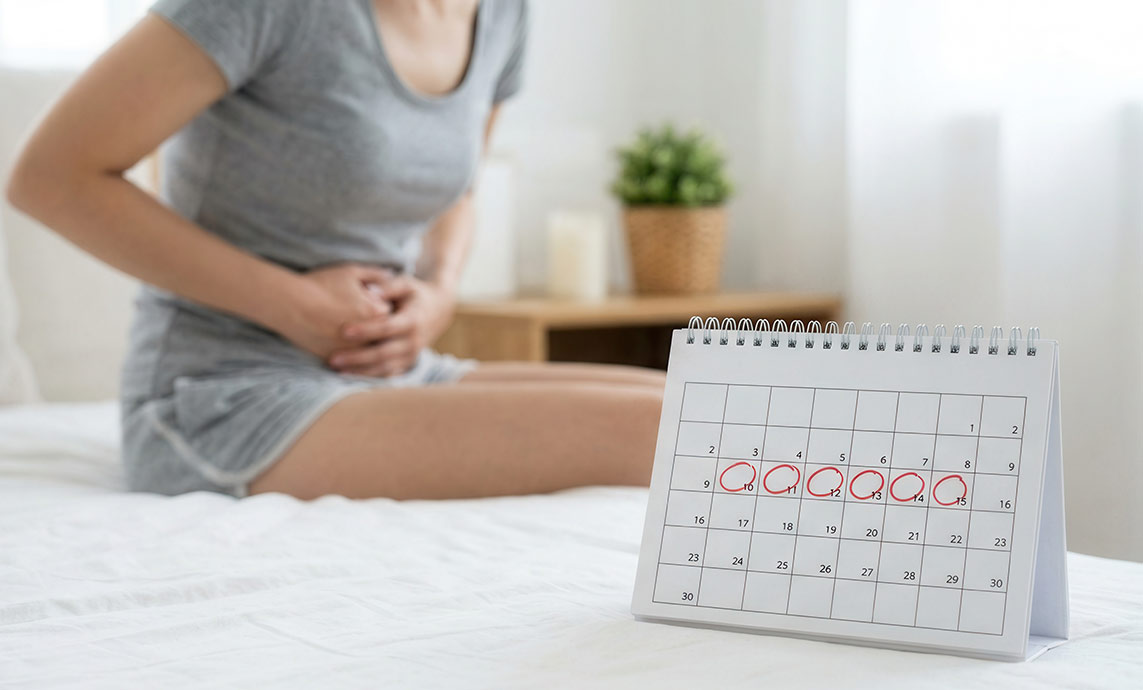
It’s normal to wonder, “How long do periods last?” In this article, we’ll walk you through how long periods last and when to expect their arrival.
You just had your period… But just 3 weeks later, you spot bleeding again. Is that normal?!
It’s a question many tweens and teens (and even their parents) ask when navigating the often confusing world of menstrual cycles. Growing up, many of us learn that our periods follow a 28-day cycle. That means from the first day of your period, it’s about 28 days (or 4 weeks) til you start your period again.
But the question of “how long is a menstrual cycle?” isn’t as simple as it seems.
The truth: the 28-day guideline is really just the average period cycle. Menstrual cycles can actually range from as few as 21 days between periods, to as many as 38 days and still be healthy! Especially in the first two years after getting your period, it takes your body time to become “regular” and figure out things like PMS symptoms, bleeding intensity, and how long periods last.
In this blog, we’ll walk you through how often you can expect to get your period, plus what can make your period arrive sooner or take longer so you can feel more prepared.
A quick overview of your monthly cycle
Understanding your monthly cycle can feel like learning a new language at first. Here’s a simple breakdown:
- Menstrual Phase: Your menstrual period is your body’s way of clearing out the old cycle’s uterine lining to prepare for a new cycle. Bleeding typically lasts 2 to 7 days. Usually, the first few days have heavier menstrual flow, with lighter spotting happening the last several days.
- Follicular Phase: Starting on the first day of your period and lasting until ovulation, your body builds up the uterine lining as estrogen levels rise.
- Ovulation: Around the middle of your cycle (around day 14, when the cycle is 28 days), the ovary releases a mature egg. This egg then travels down the fallopian tubes.
- Luteal Phase: After ovulation, progesterone levels rise to support a possible pregnancy. If the egg isn’t fertilized, these hormone levels drop, and your body sheds the lining of the uterus, starting a new cycle with menstruation.
Each phase comes with its own physical and emotional experiences. Learning about them can help you track your period to better understand what’s normal for you.
Why are some periods longer or shorter?
It all comes down to the complex dance of hormones in your body. During each cycle, hormones like estrogen and progesterone work together to get your body ready for pregnancy. Variations in timing and hormone levels across each cycle phase can lead to differences in the timing of your period’s arrival.
Here are some other factors that can affect cycle length:
- The first few years: In the first couple of years after you start your period, cycles can be unpredictable as your body finds its rhythm.
- Perimenopause: For older individuals, hormone levels shift as you approach menopause, sometimes resulting in shorter cycles.
- Stress: Stressful events boost a hormone called cortisol, which can lead to other hormonal imbalances and irregular cycle lengths.
- Recent illness: Recovering from a cold or flu can temporarily affect your cycle, causing delays or early arrivals.
- Significant weight changes: Hormone levels can be affected by rapid shifts in weight.
- Hormonal birth control: These types of birth control are designed to impact hormone levels, sometimes leading to longer or shorter cycles.
- Intense exercise: Some athletes with rigorous schedules may find that their period takes longer to arrive, or even stops altogether.
- Hormonal influences: Fluctuations—especially changes in progesterone levels during the luteal phase—can delay shedding of the uterine lining, resulting in longer cycles.
- Medical conditions: certain conditions like polycystic ovary syndrome (PCOS) or uterine fibroids can also impact cycle length.
Cycles shorter than 21 days
If your cycle is consistently shorter than 21 days, it might be due to factors like early menstrual cycles, stress, recent illness, significant weight changes, or hormonal birth control. In rare cases, underlying conditions—such as uterine fibroids or a lack of ovulation—can lead to consistently shorter cycles. If you notice your cycle remains shorter than 21 days for more than two consecutive cycles (about six weeks), it’s a good idea to consult with your doctor to rule out any concerns.
Cycles longer than 35 days
If more than 35 days pass between your periods, it could be that your hormones are taking longer to settle into a routine—especially if you’re new to tracking your menstrual cycles. Stress, vigorous exercise, and significant weight changes can also extend your cycle. Variations in progesterone levels can also delay the shedding of the uterine lining. This, in turn, can often result in longer cycles. If your cycle consistently extends beyond 35 days, consider reaching out to your doctor to ensure there isn’t an underlying condition that needs attention.
Get to know your period’s “normal”
If you want to understand your typical menstrual cycle, one of the best things you can do is start tracking your period. In a diary or period tracking app, try to note details like:
- Bleeding duration: Note when your period starts and how many days it takes before spotting finishes.
- Cycle length: Write down how many days between periods. o this by writing down the first day of your period, then counting the days between that and your next period.
- PMS symptoms: Notice changes in mood, physical symptoms, and even aspects like vaginal discharge. These are all clues to your body’s natural rhythm.
- Menstrual flow: Document whether your menstrual flow is heavier at the beginning and lighter later on, and how often you might experience blood clotting.
Tracking these details can help you become more in tune with your body, so you can confidently know what’s “normal” for you. This can also come in handy if you do decide you want to chat with a doctor about any concerns like irregular periods.


