
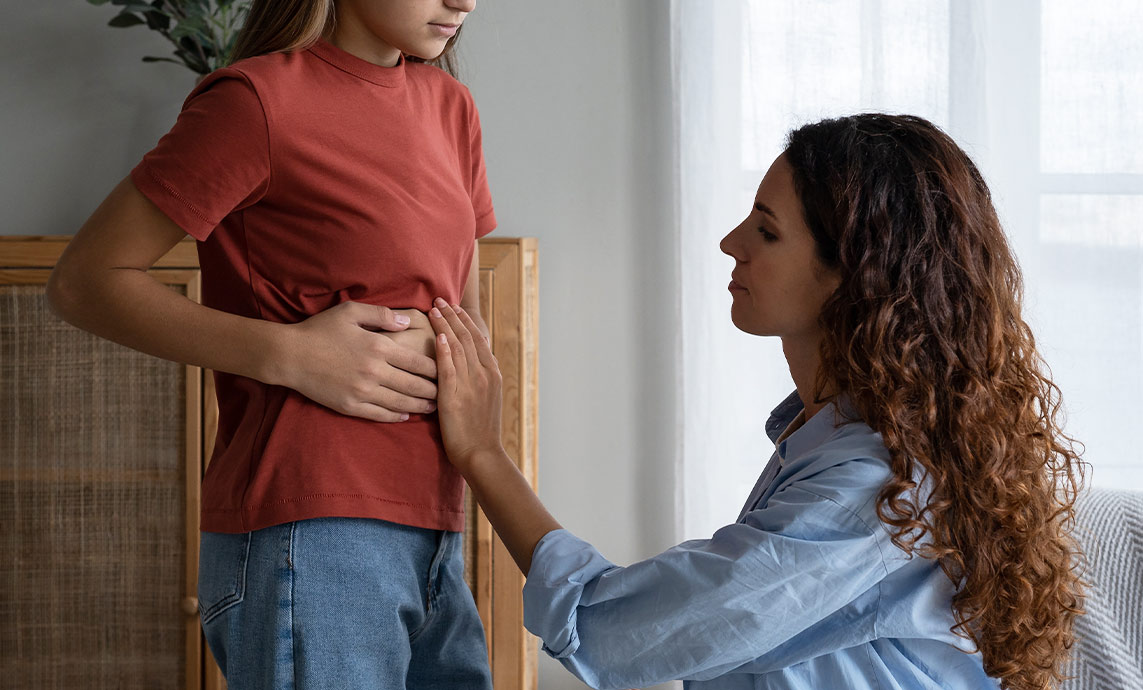
It’s normal to be curious about when your first period will arrive. Learn the average age many girls start their period, signs it’s coming, and how to prepare so you feel confident and ready.
Wondering whether your first period is too ‘early,’ or stressing about being ‘behind’? You’re not alone! It’s entirely normal to wonder if your body’s “on time.”
Here’s the truth: there’s no one “right” time to get your period!
Your body is on a unique timeline, doing what’s right for you on its own schedule. And that could look completely different from someone else’s timeline and still be entirely healthy.
In this blog, we’ll dig into the average age of first periods, reasons your period could start earlier or later, what to expect with your first period, and how to prepare so you feel confident and ready when your period arrives.
When to expect your first period
The average age of first menstrual period is around 12 years old, but anywhere between 10-15 years old is completely normal. Some girls may start as early as 8 or as late as 16 — both are still considered typical and healthy.
According to the Mayo Clinic, 98% of kids get their first period before they turn 15. So if you’re still under 15 and haven’t started yet, that’s okay — you’ve still got time. (If you’re worried, reach out to your doctor — they can check to make sure everything’s okay and on track.)
Your first period usually happens about 2-3 years after your breasts begin developing. But don’t worry if you don’t follow that timeline exactly — everyone’s body is different.
Signs your period may be about to start
Our bodies often give us clues as to when our first period might be coming. Here are some common symptoms and signs your period may be about to arrive:
- Breast development → Most people get their period about 2-3 years after their breasts start growing.
- Vaginal discharge → A white or clear discharge (kind of like mucus) often starts appearing 6-12 months before your first period.
- Underarm and pubic hair growth → If you’ve noticed more hair growing in these areas, your period might not be too far away.
- Growth spurts → Many people experience a growth spurt and get significantly taller right before their period arrives.
Remember: Not everyone follows the same pattern! Some girls begin experiencing discharge earlier and further away from their periods. Others get their periods without much warning at all.
What can cause a delayed first period?
If you’re 15 or older and haven’t gotten your first period, or your breasts started developing more than 3 years ago and your period still hasn’t arrived — it might be time to check in with a doctor.
Here are 4 common reasons your period could be delayed:
- Lots of intense exercise → Sports like dance, gymnastics, and track can lessen estrogen and burn more energy than your body consumes. This can prompt the body to go into energy-saving mode, prompting it to delay puberty to preserve resources.
- Low body fat → Your body needs a minimum level of fat to support hormone production. Since fat cells help regulate estrogen, having very low body fat can disrupt hormone signals and delay your first period.
- Chronic stress → Ongoing stress increases cortisol, which can interfere with the hormones responsible for triggering puberty. When those hormones drop, it can slow down the onset of menstruation.
- Medical conditions → Some conditions like thyroid disorders or polycystic ovary syndrome (PCOS) can sometimes delay the start of your period.
That said, some people just naturally start their periods later without rhyme or reason — and that’s okay too!
What can cause an early first period?
Some people get their first period before age 10. While this is rare, research suggests earlier periods are becoming more common.
A few things that can contribute to an early period include:
- Body composition → Higher body fat can lead to earlier periods because fat cells store and release estrogen. When estrogen levels rise past a certain point, it signals to the brain that the body is ready to start menstruation.
- Diet & sugar intake → Studies suggest that consuming 1.5+ sugar-sweetened drinks per day may be linked to earlier puberty.
- Environmental factors → High stress levels or exposure to certain chemicals.
- Chronic stress can increase cortisol, a hormone that can disrupt estrogen and progesterone levels, potentially prompting an earlier first period.
- Research has found that exposure to certain endocrine-disrupting chemicals that mimic estrogen in the body (like BPA and phthalates) may be linked with early puberty.
- Family history → If your parent or older sibling got their period early, you might too!
If you get your period before age 8, it’s a good idea to check in with a doctor just to make sure everything is developing as expected.
What to expect with your first period
Your first period might not look exactly like the stories you’ve heard. It can take 2 years for your menstrual cycle to settle into a regular pattern. That means:
- Your menstrual cycle might last 28 days one month, then 35 days the next.
- The amount of blood can vary from light spotting to “more typical” bleeding patterns.
- The bleeding might last 2-7 days, with some months being shorter or longer than others.
Your period might decide to show up on a totally random day, like right before gym class or during a sleepover. Or, it might start so lightly that you barely notice. Either way, don’t worry — every first period experience is different!
All of this is completely normal while your body adjusts to its new cycle!
How to prepare for your first period
Even though you can’t predict the exact day your period will start, you can make sure you’re prepared! Here’s how:
✅ Carry period supplies → Keep some pads or panty liners in your backpack, locker, or bag just in case.
✅ Pack an extra pair of underwear → Accidents happen! Having a clean pair with you can help if you get caught off guard.
✅ Consider a period emergency kit → Pinkie’s Prep Pouch includes ultra-absorbent, toxin-free pads in three different sizes, so you’re covered no matter what!
✅ Talk to someone you trust → If you’re feeling anxious, talking to a parent, sibling, or friend who’s been through it can help.
When should you talk to a doctor?
While periods vary widely, it’s a good idea to check in with a doctor if:
- You haven’t gotten your period by age 16
- You started your period before age 8
- You’re experiencing other unusual symptoms like extreme cramps, excessive hair growth, or unexpected weight changes
Doctors are used to answering questions about puberty, so don’t be afraid to ask!


